


Prof. Yugui Yao and Assoc. Prof. Junxi Duan Group from BIT Achieves Significant Progress in the Nonlinear Hall Effect Quantum Oscillation and Detection of Quasiparticles’ Quantum Geometry
来源: 作者: 发布时间:2026-06-18
Recently, Prof. Yugui Yao and Assoc. Prof. Junxi Duan Group has for the first time proposed and experimentally observed a completely new phenomenon of nonlinear Hall quantum oscillation in the twisted graphene moiré superlattice system — the “nonlinear Hall Brown-Zak oscillations (NHBZO)” — and used it to reveal the quantum geometric properties of Brown-Zak fermions. The related research result is published in the top international physics journal Physical Review Letters, and has been selected as the “Editors' Suggestion” and “Featured in Physics”. It has been reported by the viewpoint column of the Physics magazine (APS publications) with the title “Enhancing the Quantum Oscillation Toolbox”.
The second-order nonlinear Hall effect (NLHE) caused by the quantum geometry of the electron Bloch wave function (composed of Berry curvature and quantum metric) has attracted much attention in recent years. However, most experiments of this phenomenon are performed with zero magnetic field. In the field of first-order response, magnetic-field-driven quantum oscillation effects (such as SdH oscillations) have been proven to be core tools for detecting electronic states, mapping Fermi surfaces, and studying exotic quasiparticles. If quantum oscillation phenomena also appear in the nonlinear Hall effect under a magnetic field, it will have great scientific value and is expected to provide a completely new approach to revealing the rich quantum geometric properties of quasiparticles.
On the other hand, placing a Bloch electron system in magnetic fields will break the lattice translational symmetry, causing failure of the Bloch's theorem. However, when the magnetic field satisfies certain conditions (the magnetic flux of a unit cell is commensurate with the magnetic flux quantum), translational symmetry is restored, the system will form a Hofstadter butterfly energy spectrum, and excite peculiar quasiparticles capable of long-distance ballistic transport — the Brown-Zak fermions. Although there have been previous reports of Brown-Zak quantum oscillations in first-order response regime, how to sensitively detect the fermions at low magnetic fields and reveal the quantum geometric properties has always been a huge experimental challenge.
To address these issues, the research group proposed a completely new research idea for the first time: taking advantage of the extreme sensitivity of the second-order nonlinear Hall effect to the quantum geometric distribution, through the disappearance and reappearance of Brown-Zak fermions under different magnetic fields, the alternating dominance of different mechanisms of second-order nonlinear transport is triggered, thereby establishing a new quantum oscillation phenomenon. In large-angle twisted bilayer graphene (TBG) and twisted double bilayer graphene (TDBG) devices, the group successfully observed clear nonlinear Hall quantum oscillation signals; the waveform of this oscillation is not tuned by the position of the Fermi energy, representing the motional behavior of Brown-Zak fermions under magnetic fields.
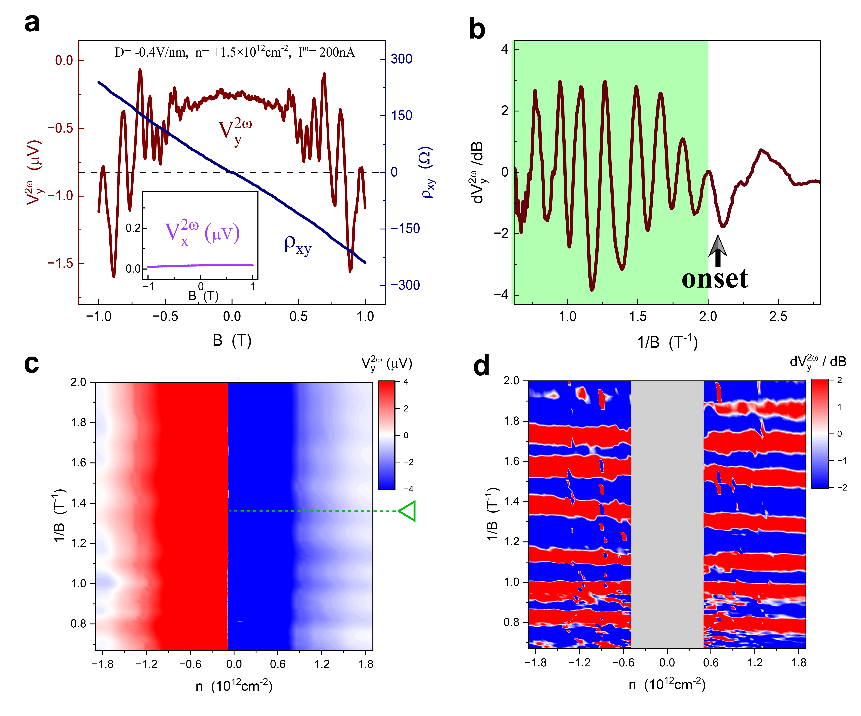
Fig. 1. Nonlinear Hall Brown-Zak oscillations。
This brand-new physical phenomenon has the following two important highlights:
(1) Unlike the Brown-Zak quantum oscillation mechanism in the first-order transport regime, which relies on a high magnetic field (usually >1.5T), the onset magnetic field of this nonlinear Hall quantum oscillation is lower, at only about 0.5T, indicating that it is a much more sensitive and powerful new method for detecting the physical properties of Brown-Zak fermions than in first-order transport.
(2) The quantum geometric properties of Brown-Zak fermions are experimentally revealed for the first time. Through detailed temperature-dependent scaling law analysis, the research group proved that under general magnetic fields deviating from commensurate conditions, the nonlinear transport is dominated by the classical nonlinear Drude scattering mechanism; however, once the commensurate conditions are met and the Brown-Zak fermions appear, their nonlinear transport is dominated by the quantum geometry (the Berry curvature dipole and the quantum metric dipole). This not only enriches the types of quantum oscillations but also completes an important puzzle piece regarding quantum geometric behavior in the Hofstadter’s butterfly diagram.
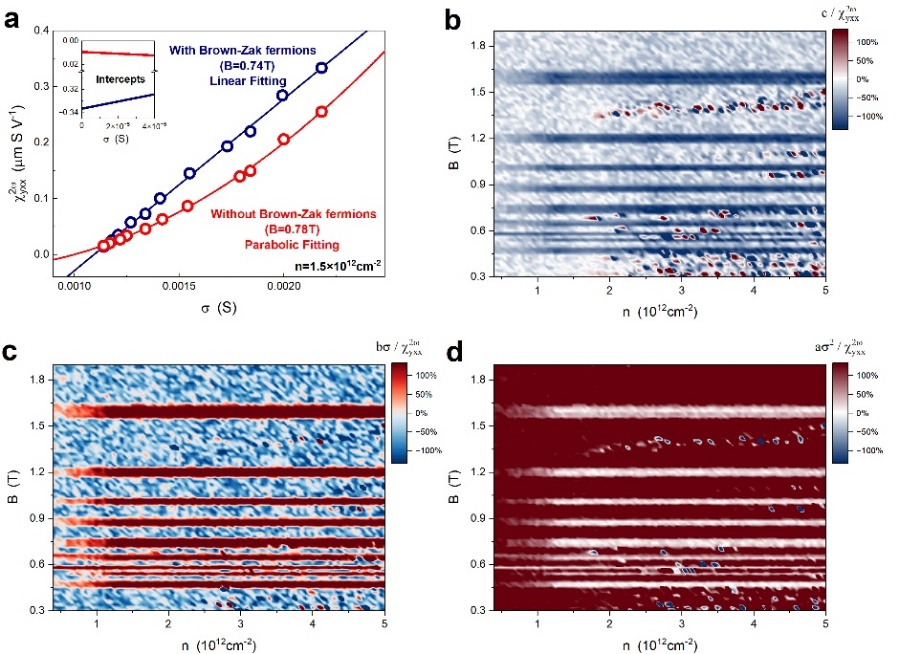
Fig. 2. Detecting the quantum geometric nature of Brown-Zak fermions.
Beijing Institute of Technology is the primary completion unit for this research work. The co-corresponding authors of this paper are Associate Professor Junxi Duan and Professor Yugui Yao from the School of Physics at Beijing Institute of Technology. The collaborators of the paper include Associate Professor Shihao Zhang from Hunan University, Associate Professor Qinsheng Wang from Beijing Institute of Technology, and Professor Jinhai Mao from the University of Chinese Academy of Sciences. Jinrui Zhong, a Ph.D. student from the School of Physics at Beijing Institute of Technology, is the first author of the paper. This work thanks the helpful discussion with Professor Yang Gao from University of Science and Technology of China, Associate Professor Xiao Li and Yingwen Zhang from City University of Hong Kong, Juncheng Li and Cong Chen from University of Hong Kong. This work was supported by the National Natural Science Foundation of China, the National Key Research and Development Program, and the Micro-Nano Technology Center of Beijing Institute of Technology.
Jinrui Zhong, Huimin Peng, Yuqing Hu, Qi Feng, Qiuli Li, Shihao Zhang, Qinsheng Wang, Jinhai Mao, Junxi Duan*, Yugui Yao*,“Nonlinear Hall Quantum Oscillations to Probe Topological Brown-Zak Fermions in Graphene Moiré systems”,Phys. Rev. Lett. 136, 246301 (2026) (Editor’s Suggestion; Featured in Physics)
URL:https://doi.org/10.1103/ydym-5t5p
New from Physics magazine: https://physics.aps.org/articles/v19/83